We’ve been DJing weddings for a long time now — long enough to know there’s no such thing as a perfect wedding DJ in the abstract. There’s only the right DJ for your wedding. So what makes a good wedding DJ in practice? It’s worth talking about honestly, because a lot of what you’ll read online is marketing fluff. Here’s our take, from a team that’s done this hundreds of times.
What Makes a Good Wedding DJ: Experience Isn’t What You’d Think
Years of gigs matter, but what really counts is whether a DJ has done your type of event. A DJ who’s brilliant at nightclubs might be completely out of their depth at a wedding, where the crowd shifts from toddlers to 80-year-olds over the course of a night. Wedding DJ experience means knowing how to handle a dancefloor that’s half-empty at 8pm and absolutely rammed by 10pm, and not panicking about either. That’s a big part of what makes a good wedding DJ — someone who reads the room and adapts without missing a beat.
It means knowing that when the father of the bride asks for something you’ve never heard of, you either have it or you know how to handle the moment without making him feel embarrassed. That kind of thing only comes from doing it.
Planning Makes the Night — Not the Night Itself
The best wedding receptions we’ve done weren’t the result of inspired in-the-moment decisions. They were planned well. We use an online wedding planner with every couple so we’ve worked through the running order, the first dance, the must-plays and the absolutely-nots before we ever load a van. By the time we arrive at the venue, we already know the couple, the songs, and what matters to them.
The improvisation happens within that framework — reading which direction the room is going, spotting when to shift tempo, knowing when to take a guest’s request and when to smile and quietly park it for later. But none of that works without the groundwork.
Equipment Matters, But It’s Not the Point
We use good kit — professional-grade speakers, proper lighting, backups for everything. But couples who get too focused on equipment specs are asking the wrong question. You’re not hiring a sound system — you’re hiring a team. The best setup in the world sounds terrible if the DJ doesn’t know how to use it, and a competent DJ can make modest equipment sound great.
What you should care about is whether the DJ has a second copy of everything critical. The night we’d hate to have is the one where something fails with no fallback in place. That’s never happened to us, and we intend to keep it that way.
The MC Role is Underrated
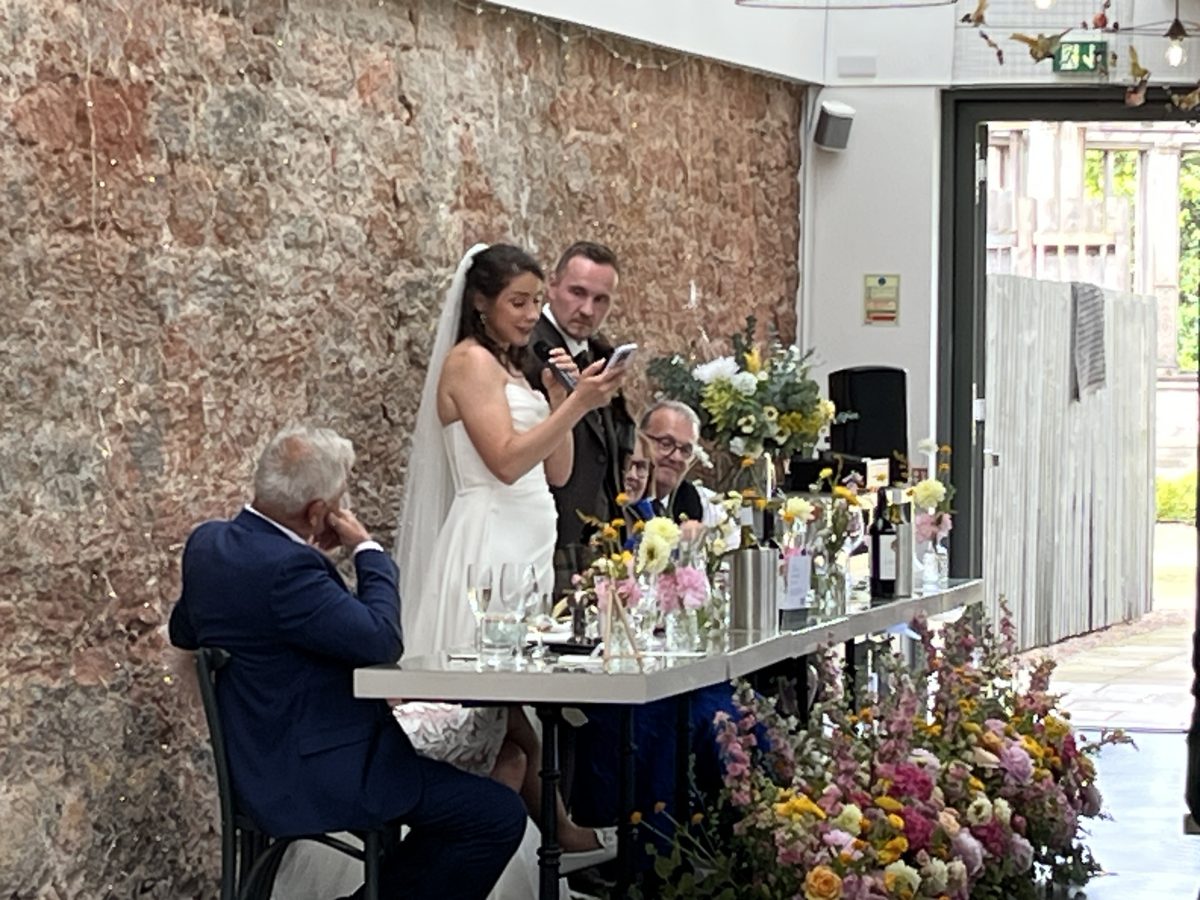
Half of what we do at a wedding has nothing to do with music. We’re coordinating with the venue, making sure the photographer knows the first dance is two minutes away, keeping an eye on whether the speeches have run over and the timeline needs adjusting. When we get on the microphone to welcome guests onto the dancefloor, the tone of that matters — too loud and shouty and people cringe, too quiet and nobody hears it.
A good DJ who can’t MC is only doing half the job at a wedding. It’s worth asking specifically about this when you’re speaking to potential DJs — MC skills are as much a part of what makes a good wedding DJ as musical taste.
How to Find the Right One
Talk to them. Not just by email — actually speak. You’ll know within five minutes whether this is someone you trust to be the voice of your reception. Ask how they handle requests on the night, find out what happens if they’re ill, and check whether they’ve played your venue before. The answers matter less than how they answer.
If you’d like to have that conversation with us, get in touch. Or if you’d like to know more about how we work a wedding reception, the wedding reception page covers it in detail. The National Association of DJs has a useful guide too, if you want an independent view on what makes a good wedding DJ before you decide.


