You’ve found your dream venue. The room is stunning, the catering is perfect — and then the coordinator mentions a sound limiter. Sound limiters at wedding venues catch a lot of couples off guard, but if you’re not sure what that means for your evening, you’re not alone. Here’s everything you need to know, and exactly how we handle it so your dance floor doesn’t suffer.
What Is a Sound Limiter?
A sound limiter is a device venues install to monitor and control the volume of amplified music. Most use a traffic light display. Green means you’re fine, amber is a warning, and red means the volume is too high. When the audio hits a set threshold, the limiter alerts the performer. In some cases it automatically cuts the power to all plugged-in equipment until levels drop back down.
They’re common in older buildings and hotels in residential areas. Venues that have received noise complaints from neighbours in the past often install one too. If your venue has one, your entertainment terms will include it — and your DJ needs to know about it well in advance.
Why Do Venues Have Them?
It usually comes down to planning conditions or neighbour complaints. Many of Scotland’s most beautiful wedding venues — historic buildings, country houses, city-centre spaces — sit close to housing. As a result, they’re often subject to local authority noise restrictions, and a handful of complaints can put an entertainment licence at risk. Venues install limiters as a safeguard.
The venue sets the limiter level, often in consultation with the local council. It varies significantly. Some venues operate comfortably at 97dB or above, while others are restricted to as low as 87dB. That difference matters more than it sounds. A 3dB reduction halves the technical sound level, and anything beyond 6dB is a noticeable drop in energy.
Will It Affect the Atmosphere at My Wedding?
Not if your DJ knows what they’re doing. An experienced DJ working within a limited venue is not the same as a quiet DJ. It’s a question of technique, equipment, and preparation.
We arrive early at every venue with a sound limiter to test levels properly before a single guest walks in. Speaker placement is critical. Positioning speakers correctly means the sound reaches the dance floor efficiently, without pushing unnecessarily high volume toward the limiter’s microphone. We use processing equipment to maximise clarity and warmth at lower levels, so the music still sounds full and energetic even within tight restrictions.
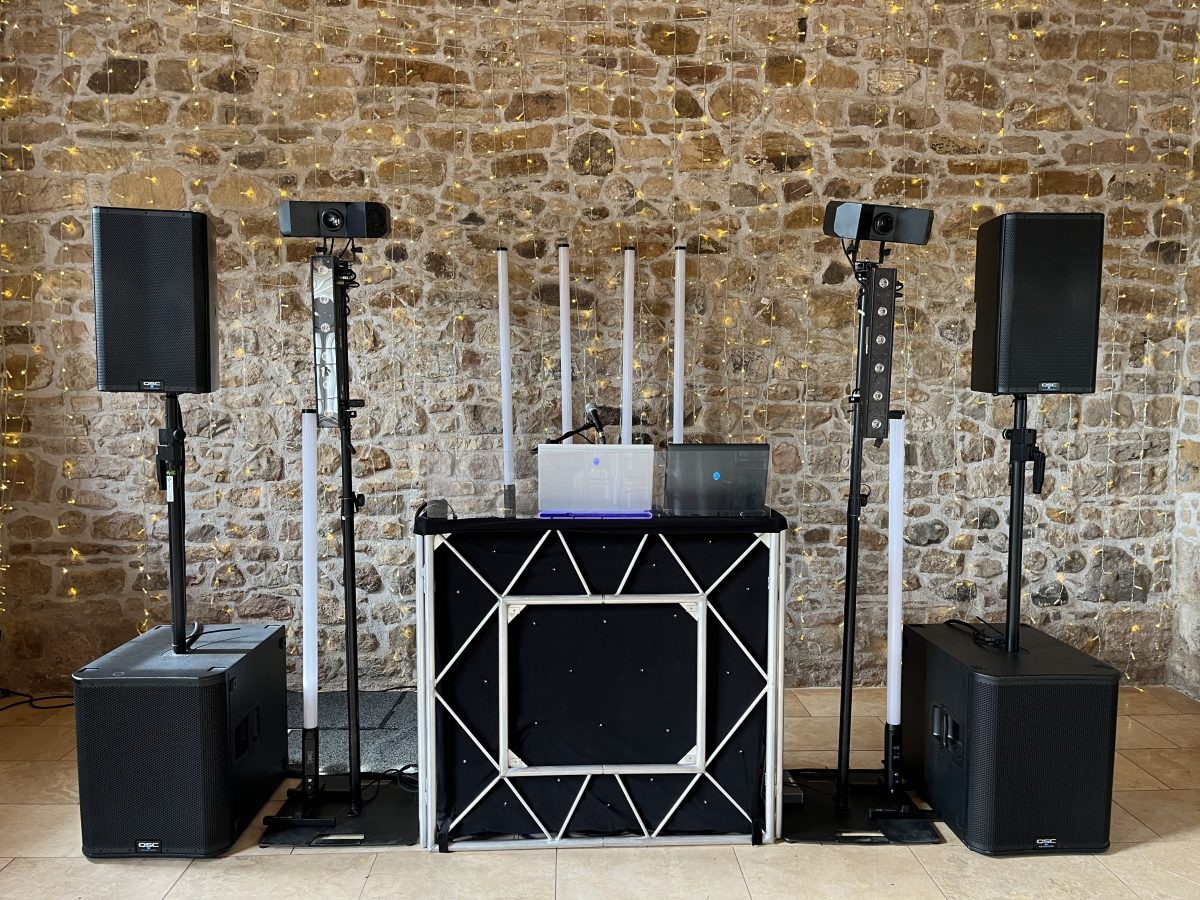
In larger rooms or venues with quieter areas, we can add supplementary speakers. This means guests further from the dance floor can still hear clearly, without turning up the main system.
Questions to Ask Your Venue
Understanding sound limiters at wedding venues starts with asking the right questions. If you’re in the process of booking a venue, it’s worth asking these before you sign:
- Is there a sound limiter installed, and what level is it set at?
- Does the limiter cut power automatically, or just display a warning?
- Is there a designated entertainment area with tested acoustics?
- What time does amplified music need to finish?
- Are there any restrictions on sub-bass frequencies?
Sharing the answers with your DJ as early as possible means they can prepare the right equipment and configuration for your specific room.
Marquee Weddings and Sound Limiters
Marquees in the grounds of a venue or private estate are often more exposed to noise travelling across open ground. As a result, some venues set lower limits for outdoor or semi-outdoor structures than for internal event spaces. If you’re planning a marquee reception, ask specifically whether different restrictions apply. It’s also worth checking whether there’s an indoor option if the weather or noise conditions change.
Our Approach to Sound Limiters at Wedding Venues
We’ve worked in limiter venues across Scotland for years — from intimate spaces in Edinburgh’s New Town to country houses in Perthshire and the Borders. A sound limiter has never stopped us delivering a full, energetic evening that keeps people on the dance floor.
When you book with us, we ask about your venue’s restrictions as part of the planning process, and contact the venue directly if needed. We arrive with the right equipment for the room and set up in a way that gives us the best possible performance within whatever limits apply. You shouldn’t have to think about it on the night — that’s our job.
We handle sound limiters at wedding venues across Scotland every season, so nothing here needs to feel daunting. If you’re planning a wedding at a venue with a sound limiter and want to talk through how we’d approach it, get in touch. We’re happy to give you an honest assessment before you book. For a deeper technical breakdown, FixTheMusic’s sound limiters guide is a useful independent resource covering the UK regulations behind them.
Frequently Asked Questions
What happens if the sound limiter cuts the power during my wedding?
If the power cuts, the music stops until the DJ brings levels down and restarts the system. A good DJ will prevent this by monitoring levels carefully throughout the evening. In over a decade of working in limiter venues, we’ve never had an unplanned cut during a live event — preparation and the right equipment make the difference.
Does a sound limiter mean we can’t have bass-heavy music?
Not necessarily, but sub-bass frequencies do travel further and can trigger limiters more easily than mid or high frequencies. Some venues restrict bass specifically. We use audio processing to manage this — reducing the frequencies that cause problems while keeping the music sounding full and punchy on the dance floor.
Should I tell my DJ about the sound limiter before the wedding?
Yes — as early as possible, and ideally with the exact dB limit if your venue can provide it. The more notice your DJ has, the better they can prepare the right equipment and plan speaker placement for your specific room.
Are sound limiters common at Scottish wedding venues?
More common than many couples expect. City-centre venues, historic buildings, hotels in residential areas and country houses near housing are all likely to have some form of volume restriction. It’s always worth asking — and it’s never a reason to rule a venue out if the DJ knows how to work within it.


