If you’ve ever been at an awards night where each winner walks up to the stage to a perfectly chosen piece of music — something that gets a laugh, raises the energy, or just feels exactly right — you’ve experienced a walk-up sting done well. If you’ve been at one where the DJ plays the same ten-second blast of something generic for every single person, you know how flat that can feel. There’s a real art to getting walk-up stings right. In fact, getting walk-up stings awards ceremony moments right is one of the parts of corporate event work we enjoy most.
What Is a Walk-Up Sting?
A walk-up sting (sometimes called a presentation sting or walk-on music) is a short burst of music played as each award recipient walks from their seat to the stage to collect their prize or make a presentation. Typically five to twenty seconds long, it’s timed to fill the applause gap and give the moment a sense of occasion — or humour, depending on the event’s tone.
Done well, stings add personality and energy to what can otherwise become a repetitive format. Done poorly, they slow everything down and make the evening feel amateur. The difference is almost always in the planning.
Sting Etiquette — Getting the Tone Right
Match the tone of the event
A black-tie gala for five hundred people calls for something different from a company’s internal awards night for sixty. At a formal event, stings tend to be more cinematic or classic, whereas at an informal night you can go further with comedy tracks or personalised choices. Because of that, it pays to know your room before you build your list.
Edit your hooks
Most stings work best when you drop straight into the most recognisable or energetic part of the track — not the intro. A good DJ will have pre-edited cue points set so the music hits the moment the name is called, not thirty seconds later. This is one of the key differences between a DJ who does this regularly and one who doesn’t.
Length matters
Five to ten seconds is usually enough. The sting should cover the walk from seat to stage and fade as the person arrives at the podium. Too long and it outstays its welcome, and too short and it feels like a mistake. Because of that, we always confirm walk distances with the venue coordinator in advance — a forty-metre walk needs a longer sting than a ten-metre one.
Consider walk-off stings too
Some events also use a short sting as the winner walks back to their seat with the award. This works particularly well at larger, more theatrical events and gives the whole room a second beat of energy after the applause.
Plan ahead — don’t improvise
The worst walk-up sting situations we’ve seen are where the organiser assumes we’ll “just play something” for each person on the night. Without a list, you’re either playing the same track repeatedly or making guesses in real time with no context. A shared Google Sheet with winner names, sting choices, and any notes takes an hour to put together and transforms the evening.
Volume and fade
The sting should be loud enough to fill the room during the walk but fade cleanly as the recipient reaches the microphone. We always fade manually rather than using a fixed timer, because it gives us the flexibility to extend or cut depending on how quickly someone walks.
Walk-Up Stings Awards Ceremony Guide: How the Evening Runs
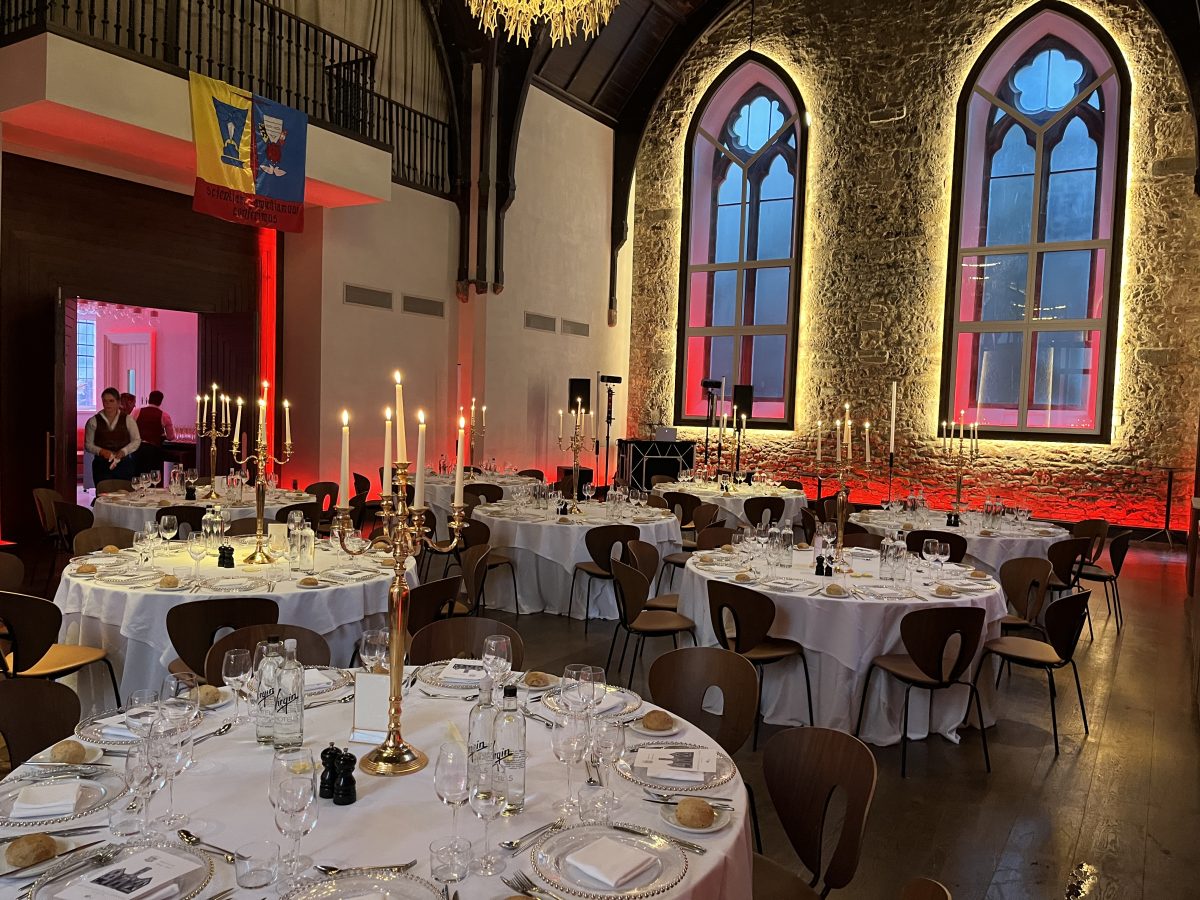
Understanding the full arc of an awards evening helps with planning the music for every part of it, not just the stings.
- Arrivals and drinks reception — background music that creates atmosphere without demanding attention. We typically use something upbeat but unobtrusive: soul, jazz, or commercial background.
- Dinner — music drops in volume and formality. Guests are talking, so the music needs to fill silence without competing with conversation.
- Awards — this is the main event. Stings for each award, applause management, and possibly a compere or host we’re working alongside. Communication between us and whoever is calling names from the stage is critical.
- After-party — once the awards are done, the tone shifts entirely. This is where the DJ element really comes in, and the energy should build from the formal ceremony into something more celebratory.
40+ Walk-Up Sting Track Recommendations
Classic & Timeless
- Also Sprach Zarathustra — Richard Strauss (the 2001 fanfare)
- Eye of the Tiger — Survivor
- We Are the Champions — Queen
- Simply the Best — Tina Turner
- Gonna Fly Now — Bill Conti (Rocky theme)
- You’re the Best — Joe Esposito
- Hall of Fame — The Script ft. will.i.am
- Holding Out for a Hero — Bonnie Tyler
- The Final Countdown — Europe
- Jump Around — House of Pain
High-Energy & Upbeat
- Can’t Stop the Feeling — Justin Timberlake
- Uptown Funk — Mark Ronson ft. Bruno Mars
- Happy — Pharrell Williams
- Don’t Stop Me Now — Queen
- Mr. Brightside — The Killers
- I Gotta Feeling — Black Eyed Peas
- Shake It Off — Taylor Swift
- Moves Like Jagger — Maroon 5
- Roar — Katy Perry
- Stronger — Kanye West
Uplifting & Feel-Good
- Walking on Sunshine — Katrina and the Waves
- Good Vibrations — The Beach Boys
- Lovely Day — Bill Withers
- Here Comes the Sun — The Beatles
- September — Earth, Wind & Fire
- Dancing Queen — ABBA
- Celebration — Kool & The Gang
- Gold — Spandau Ballet
- You Make My Dreams — Hall & Oates
- Sweet Caroline — Neil Diamond
Sophisticated & Premium
- Crazy in Love — Beyoncé
- Diamonds — Rihanna
- Golden — Jill Scott
- Empire State of Mind — Jay-Z ft. Alicia Keys
- Run the World (Girls) — Beyoncé
- Power — Kanye West
- Glamorous — Fergie
- Applause — Lady Gaga
- On Top of the World — Imagine Dragons
- Titanium — David Guetta ft. Sia
Presenter / Host Stings
- Let’s Get This Party Started — Pink
- Here Comes the Hotstepper — Ini Kamoze
- Good Evening — various orchestral fanfares
- Imperial March — John Williams (for a villain host vibe)
- Theme from The Apprentice — Mark Brzezicki
- James Bond Theme — Monty Norman
- Mission: Impossible Theme — Lalo Schifrin
- Smooth Criminal — Michael Jackson
Walk-Up Stings Awards Ceremony Tips for Event Organisers
Share your list in advance
Send your sting choices to the DJ at least 48 hours before the event, because this gives time to source any unusual tracks, set cue points, and check audio quality. Last-minute lists — or worse, handwritten notes on the night — create unnecessary risk.
Factor in walk distance
Walk from the furthest table to the stage and time it. Then share that with your DJ. A ten-second sting works fine for a small room. A large ballroom may need fifteen to twenty seconds to avoid an awkward silence as the recipient is still walking when the music stops.
Have backups ready
Plans change on the night — winners don’t show up, the running order shifts, someone wants a different track at the last minute. Therefore, a good sting list has a default fallback track the DJ can use if anything changes unexpectedly.
Brief the DJ on your MC or compere
The DJ and the host need to be in sync. Agree on the cue — whether the DJ hits the sting when the name is announced, when the person stands, or when they reach the aisle. A miscommunication here is the most common cause of awkward sting timing.
Music licensing
Any event using recorded music in a public setting should be covered by TheMusicLicence (PRS for Music and PPL combined). Most professional DJs carry their own DJ licence, but it’s worth confirming this with your DJ before the event. Venues often have their own licence too, so check with your venue coordinator as well.
Looking for a DJ for Your Awards Night?
We cover awards evenings, corporate dinners, and presentation nights across Edinburgh, Glasgow, and Scotland — walk-up stings awards ceremony planning included. If you’re planning an event and want to discuss music, we’d love to hear about it. Get in touch here or find out more about our corporate events service.


